Should I Let Faucets Drip During a Freeze?
Yes — during severe cold snaps, it's one of the simplest things you can do. Here's why it works, which faucets matter, and how much water is enough.
Winter habit
The Short Answer Is Yes
Letting faucets drip during extreme cold is real advice, not an old wives' tale. But it works for a specific reason, it applies to specific faucets, and it has limits — here's the whole picture.
Why moving water resists freezing
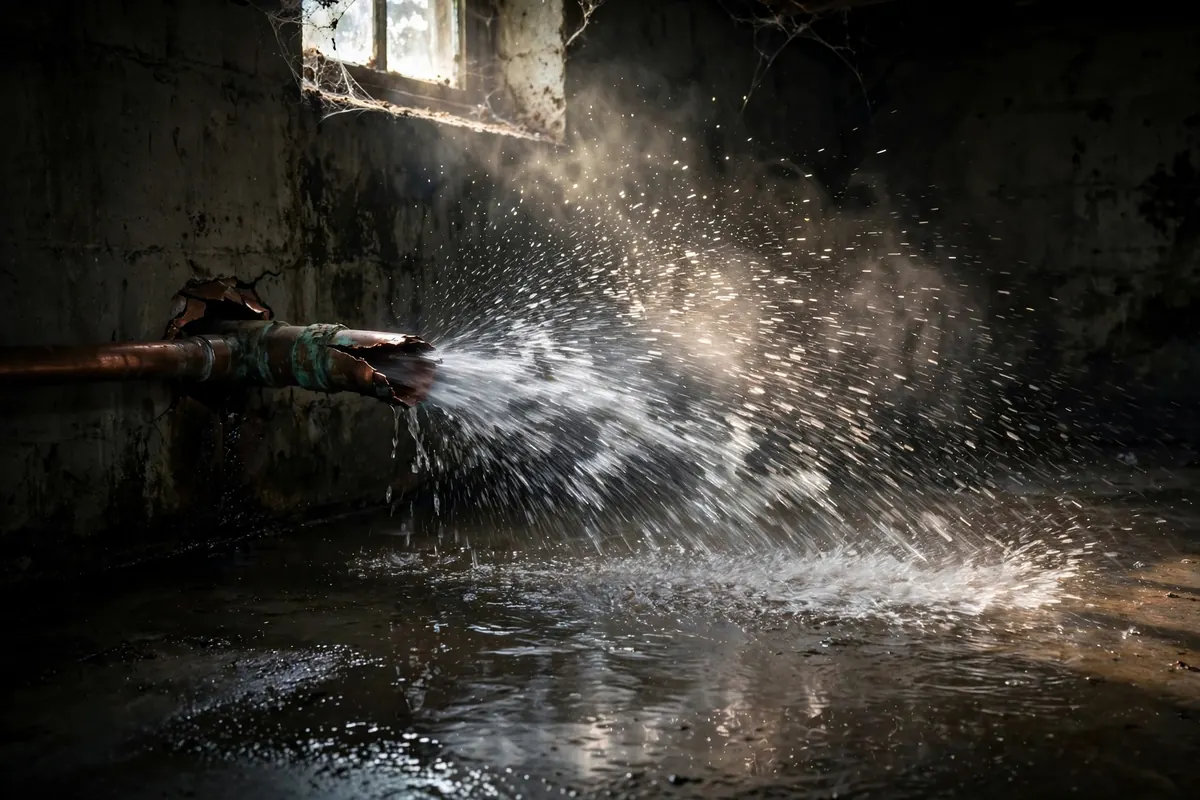
Two things happen when you crack a faucet. First, moving water is harder to freeze than still water — the flow keeps mixing slightly warmer water from deeper in the system into the cold-exposed sections. Second, and just as important, an open faucet gives the pressure somewhere to go. A pipe usually doesn't split because ice formed; it splits because the ice expanded and the pressure had no escape. An open tap relieves that pressure, which is the actual burst mechanism. That's why even a pipe that partially freezes with a faucet open is less likely to split than one that's sealed shut.
Which faucets to drip
You don't need to drip every faucet in the house. Focus on the ones fed by vulnerable runs:
- Faucets on exterior walls. Kitchen and bathroom sinks on outside walls are the priority — their supply lines run through the coldest part of the house.
- The faucet farthest from where water enters the house. Dripping the far end keeps water moving through the longest possible run of pipe.
- Cold-water lines first. Cold lines are the ones that freeze. During a truly severe cold snap — single digits or below — dripping both hot and cold is reasonable, since hot-water lines can freeze too when they sit in cold walls.
In a typical Naugatuck home, that means one or two faucets: the kitchen sink on the exterior wall, maybe a bathroom at the far end of the house. If your home has a finished basement with a bathroom, include that faucet too — basement fixtures on exterior walls are among the first to freeze, and they're easy to forget because nobody's down there at night to notice.
How much of a drip
For most cold snaps, a slow, steady drip — a few drops per second — is enough to keep water moving. When temperatures drop into the single digits or stay below freezing for days, step it up to a thin, pencil-width stream. The goal is continuous flow, not volume: you want water moving through the line at all times, not a running tap. A stream the thickness of a pencil lead is the commonly cited benchmark for extreme cold.
What dripping can't do
Dripping is a defense, not a guarantee. In extreme, prolonged cold, pipes can still freeze — especially uninsulated runs in crawlspaces and exterior walls, and especially in homes where the heat is set low. Dripping also does nothing for pipes that aren't connected to the faucet you're dripping: a frozen hose bib, a line to an unheated garage, a supply run in a wall cavity with no faucet downstream. Treat dripping as one layer of a system — insulation, 55°F thermostat minimum, open cabinet doors under exterior-wall sinks — not as the whole system.
The water-cost question
People worry about the water bill. A dripping faucet uses a small amount of water — far less than a running tap, and trivially small compared to the cost of water damage from one burst pipe. Run the drips only during the cold snap, not all winter, and the cost is negligible. If you're on a well with a pump, the same logic applies: the electricity for the pump during a freeze is nothing next to a flooded basement.
When to start and stop
Start dripping when the forecast shows temperatures dropping into the teens or lower, or when a multi-day subfreezing stretch begins — the kind of January cold snap Naugatuck gets every winter. Stop when temperatures are reliably back above freezing. And pair it with the rest of the checklist: open those cabinet doors, keep the heat up, and if the same section freezes every year despite all of this, that section needs insulation or heat cable — which is our work. Frozen pipe problems that keep recurring in the same spot are telling you the pipe needs a real fix, not another winter of drips. For frozen pipe thawing in Naugatuck or a permanent fix for a repeat offender, call (475) 323-1857.
Same Pipe Freezes Every Winter?
Drips get you through the night. Insulation or heat cable gets you through the winter. Call FlowFix and we'll fix the repeat offender for good.