Burst Pipe Repair in Naugatuck, CT
A split pipe pours hundreds of gallons before you notice. We stop the water, cut out the burst section, and join new pipe that holds.
The problem
What a Burst Pipe Actually Is
Most bursts in Naugatuck start as ice. The water you see is just the ending.
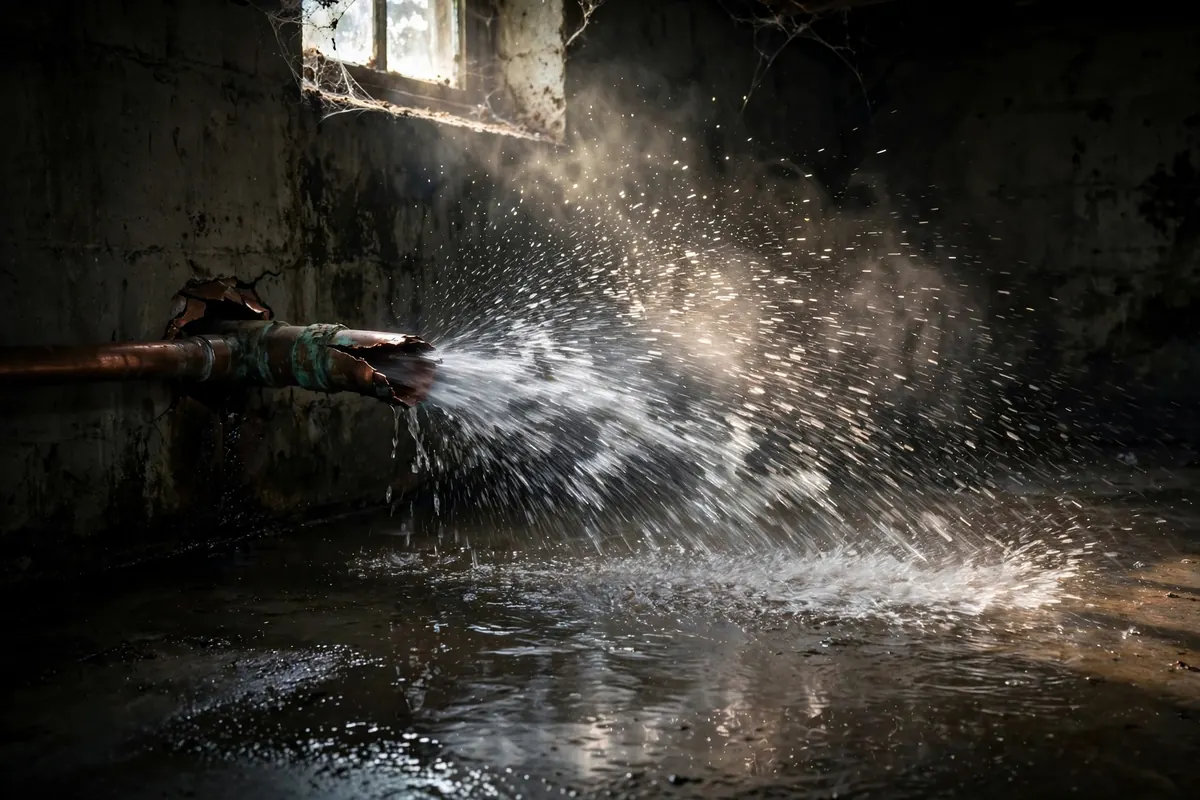
When water freezes, it expands by roughly nine percent. Inside a rigid pipe, that expansion has nowhere to go — pressure spikes against the ice blockage, and the pipe wall gives way. The split is usually a longitudinal crack, one to six inches long, and the cruel part is the timing: the burst happens during the freeze, but you see nothing until the ice thaws, sometimes hours after the cold snap that caused it.
We provide burst pipe repair Naugatuck homeowners can reach any hour of the day or night, because the delay between the split and the visible water means these calls come at odd hours — the thaw hits at 3 a.m., the ceiling stains at 6.
Freezing isn't the only cause. Corrosion thins galvanized steel and old copper from the inside until normal pressure ruptures a weak spot. Sustained pressure above about 80 PSI stresses joints and elbows. Water hammer — the shudder from fast-closing valves — fatigues pipe walls over years. In Naugatuck, these causes stack: the borough's pre-war plumbing meets New England's hardest freezes, and each winter tests every weak point in the system.
Why here
Why Naugatuck Pipes Burst
January in Naugatuck averages a low of about 22°F, and the borough sits in a river valley where cold air pools overnight. That means long stretches — December through February — where temperatures barely climb above freezing. It's the longest, most consistent freeze exposure most Connecticut plumbing will ever see.
Then there's the housing. More than a quarter of Naugatuck's owner-occupied homes were built before 1950, and many in Millville and Union City date to 1939 or earlier. Those homes often still carry galvanized steel or early copper supply lines — materials that corrode from the inside until a freeze provides the final push.
The borough has recently replaced municipal gas, electrical, and water lines as part of infrastructure upgrades — but private supply lines inside homes were not part of that work. The oldest, most vulnerable plumbing in town is exactly the plumbing that was left alone.
How we fix it
How We Repair a Burst Pipe
- Stop the water.
If you haven't found your main shutoff, we'll walk you through it on the phone — usually where the line enters the house, often the basement near the water heater.
- Find the break.
We trace the leak to its source and open up only what needs opening. A moisture stain on drywall tells us where to look, not how much to remove.
- Cut out the burst section.
The split length comes out with clean cuts on both sides, back to solid pipe. Patching over a cracked section doesn't hold — the damaged metal goes.
- Join new pipe.
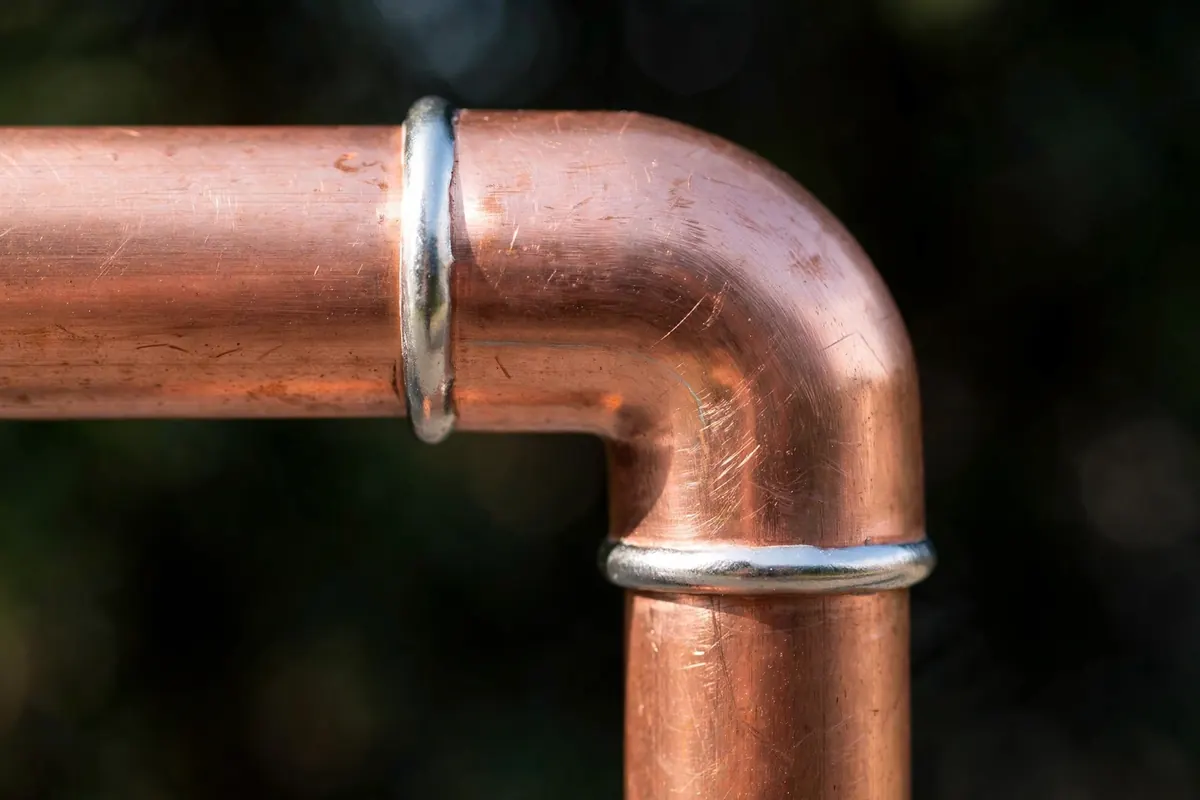
New pipe goes in with proper couplings — soldered copper to match copper, or crimped PEX where the system allows. No compression-fit shortcuts behind walls.
- Pressure-test every joint.
Water goes back on slowly while we watch each connection. No drips, no weeps, no surprises behind the wall after we leave.
- Talk prevention.
Before we leave, you'll know what caused this one and what would stop the next — insulation, rerouting, or a repipe if the system is done.
Causes
What Bursts Pipes in Naugatuck
Freeze splits
The dominant cause here. Ice expands nine percent, pressure spikes, and rigid pipe splits lengthwise — usually discovered hours later at the thaw.
Internal corrosion
Galvanized steel and aging copper corrode from the inside out. The wall thins silently until normal pressure — or one hard freeze — finishes it.
High water pressure
Sustained pressure above roughly 80 PSI strains joints, elbows, and already-thin spots. A pressure test tells us where your system sits.
Water hammer
The shudder when a valve slams shut sends a pressure wave through the line. Years of it fatigue pipe walls, especially at older fittings.
Age and fatigue
Pipe has a finite life. Decades of freeze cycles, vibration, and soil movement crack rigid lines — which is why the same run bursts twice.
Bad previous repairs
Clamp patches and epoxy hold for a while, then let go under the next freeze. We replace them with proper joined pipe so the fix is final.
Right now
If Your Pipe Just Burst — Do This Now
- Shut off your main water valve — where the line enters the house, usually the basement near the water heater.
- Open the lowest faucets in the house to drain remaining water and relieve pressure in the lines.
- If water is near outlets, appliances, or the breaker panel, shut off electricity to that area.
- Move valuables, electronics, and rugs out of the water's path.
- Take photos and video of everything before cleanup — your insurance will want them.
- Call (475) 323-1857. We'll talk you through the shutoff if you haven't found it yet.
Common questions
Frequently Asked Questions
What should I do first when a pipe bursts?
Shut off your main water valve first — usually where the water line enters the house, often the basement near the water heater. Then open the lowest faucets to drain remaining water and relieve pressure. If water is near outlets or the breaker panel, shut off electricity to that area. Move valuables, photograph everything for insurance, and call a plumber.
How do you repair a burst pipe?
We cut out the split section back to solid pipe and join new pipe with proper couplings — soldered for copper, crimped for PEX. The repair is pressure-tested before we close up. We don't patch over cracks with clamps or epoxy as a permanent fix; the damaged section comes out.
Why didn't I see water until hours after the cold snap?
Because the burst happens during the freeze but the ice itself plugs the split. Nothing flows until the ice thaws — which can be hours after temperatures rise. That's why burst calls spike on the first mild morning after a deep freeze.
Is burst pipe damage covered by homeowners insurance?
Typically, sudden and accidental burst-pipe damage — to walls, floors, and belongings — is covered. What's usually excluded: long-term slow leaks, damage from neglect, and freeze damage if the home was left unheated. Document everything with photos and video before cleanup. We're not insurance adjusters, so check your specific policy.
Do I need a permit for burst pipe repair in Naugatuck?
Stopping an active leak is permit-exempt under borough code. But cutting out a concealed burst section and replacing it with new material counts as new work and typically requires a permit and inspection. We handle the permit side where the job requires it.
Can a pipe burst in summer too?
Yes. Summer bursts are usually corrosion or pressure failures — a galvanized line that's been thinning for decades finally gives way, or sustained high pressure ruptures a weak joint. Freezing is the seasonal cause; corrosion and pressure work year-round.
Pipe Burst in Naugatuck? Don't Wait for the Thaw.
Every hour water sits inside walls and floors, the damage spreads. Call FlowFix now — we'll stop the leak, fix the pipe, and tell you how to keep it from happening again.