Emergency Pipe Repair in Naugatuck, CT
Water coming through a ceiling at 2 a.m. can't wait until morning. We answer around the clock across Naugatuck and 06770.
The problem
What Counts as a Pipe Emergency
If water is moving where it shouldn't — or not moving at all in freezing weather — it's an emergency.
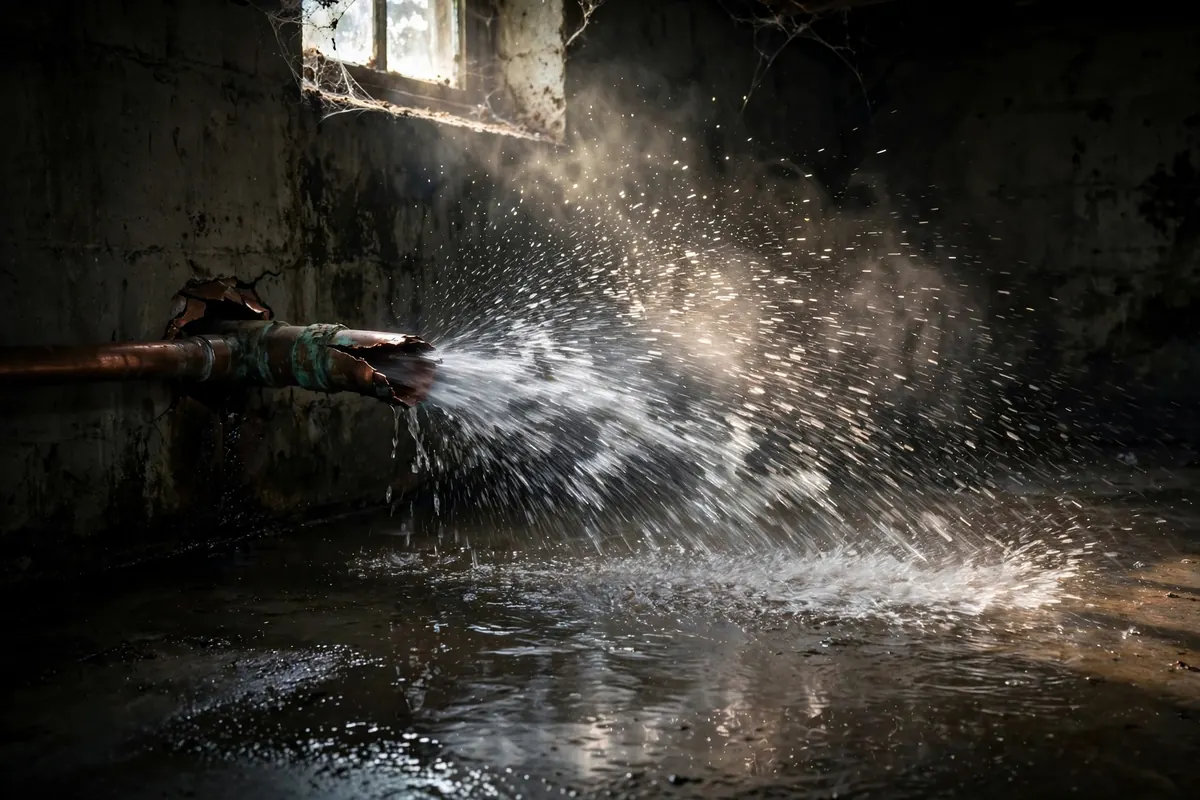
A burst supply line can pour out hundreds of gallons before you find it, and the damage doesn't pause while you wait for business hours. The emergencies we answer: an active burst with water flowing, a major leak you can't stop at the fixture, no water at all during a freeze (a frozen main or riser), and water reaching electrical panels, outlets, or appliances.
Our emergency pipe repair Naugatuck coverage runs day and night through the December-to-February freeze season — the months when the borough's valley cold pooling and 22°F January lows turn every weak pipe into a waiting emergency. More than a quarter of Naugatuck's homes were built before 1950, and those older supply lines don't fail on a schedule.
Not everything is an emergency, and we'll tell you when it isn't. A slow drip under a sink, a planned repipe, a winter-protection visit — those get scheduled during regular hours. If you're unsure, call and describe what you're seeing. We'd rather talk you through a shutoff at midnight than repair a flooded basement in the morning.
First ten minutes
The First Ten Minutes After You Find Water
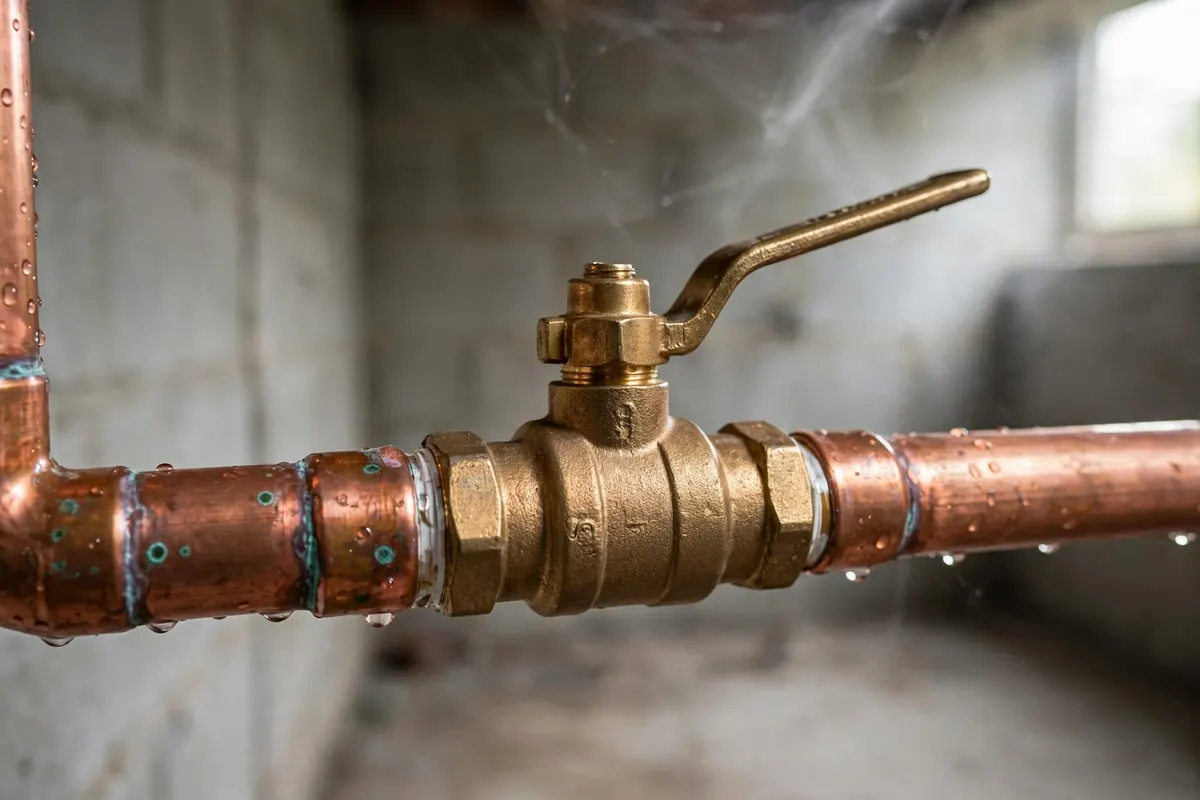
What you do before we arrive matters more than anything we do after. The single most important step: shut off the main water valve. In most Naugatuck homes it's where the water line enters the house — the basement, often near the water heater. Turn it clockwise until it stops.
Then open the lowest faucets in the house to drain the remaining water and relieve pressure in the lines. If water is anywhere near outlets, appliances, or the breaker panel, shut off electricity to that area — water and electricity don't negotiate. Move what you can out of the water's path, and take photos and video of everything before you start cleaning up; your insurance adjuster will want the unedited version.
If you can't find the shutoff, call us anyway. We'll walk you through the likely spots on the phone while we're on our way. Stopping an active leak needs no permit in Naugatuck — containment comes first, paperwork later.
How it works
What Happens When You Call
- We pick up.
A person answers, around the clock. Describe what you're seeing — where the water is, how fast it's coming, and whether you've found the shutoff.
- Shutoff walkthrough.
If the water is still running, we talk you through finding and closing your main valve before we hang up. Every minute of flow is damage.
- We come to you.
We cover Naugatuck borough-wide — Downtown, Union City, Millville, Straitsville, City Hill — and we'll give you an honest arrival window on the call.
- Contain and stop the leak.
First priority is stopping the water. Emergency leak-stopping is permit-exempt under borough code, so nothing waits on paperwork.
- Repair and pressure-test.
The burst section is cut out and replaced with properly joined pipe, then tested under pressure before we close up.
- Prevent the next one.
You'll hear what caused this failure and what stops the next — and if concealed pipe had to be replaced, we handle the permit side where the job requires it.
Be ready
Have This Ready When You Call
Where the water is
Which room, which floor, and whether it's dripping, running, or pouring. That tells us what we're walking into.
Shutoff status
Have you found and closed the main valve? If the water is still running, we'll start there on the phone.
How long it's been going
Just discovered, or has it been leaking for hours? Duration shapes the damage — and the urgency.
What's near the water
Electrical panel, outlets, furnace, water heater, stored valuables. We need to know the hazards before we arrive.
The weather
Freezing outside? A burst during a cold snap and a burst in July are different failures with different fixes.
Photos if it's safe
A quick photo of the leak and the affected area helps — but don't wade into standing water near electricity to get one.
Before it happens
Know Before the Emergency
- Find your main shutoff valve today — where the water line enters the house, usually the basement near the water heater.
- Turn it once to make sure it actually moves. A valve seized open is no valve at all.
- Label it. In a panic, nobody remembers which of three valves is the main.
- Show everyone in the house — including older kids — where it is and how to close it.
- Save (475) 323-1857 in your phone now, while the basement is dry.
- Take a photo of the valve location so a housesitter or neighbor can find it too.
Common questions
Frequently Asked Questions
Do you really answer in the middle of the night?
Yes. We answer around the clock — nights, weekends, and holidays. Pipe emergencies peak during January cold snaps, often in the early morning hours when overnight freezes thaw. If water is moving where it shouldn't, call.
How fast can you get here?
Call and we'll give you an honest arrival window based on where we are and what's already on the schedule. We don't quote fixed ETAs we can't keep. What we can promise: the shutoff walkthrough starts on the phone immediately, so the water stops before we arrive.
What if I can't find my main shutoff valve?
Call us anyway. We'll talk you through the likely locations — where the line enters the house, the basement near the water heater, sometimes a crawlspace or utility closet. If the valve is seized or buried, we deal with it on arrival and get you a working, labeled shutoff as part of the visit.
Does emergency pipe work need a permit?
Stopping an active leak is permit-exempt under Naugatuck's borough code — containment never waits on paperwork. If the repair requires cutting out and replacing concealed pipe, that counts as new work and typically needs a permit and inspection. We handle the permit side where the job requires it.
Will my insurance cover emergency pipe damage?
Sudden and accidental burst-pipe damage — walls, floors, belongings — is typically covered by homeowners insurance. Usually excluded: long-term slow leaks, neglect, and freeze damage in a home left unheated. Photograph everything before cleanup, and check your specific policy — we're plumbers, not adjusters.
What if a pipe bursts while I'm away from home?
This is the worst-case version — water runs for days. Before winter travel, shut off the main valve and drain the lines if you'll be gone more than a day during deep cold, or keep the heat at 55°F minimum. Have someone check the house, and consider a smart leak detector with automatic shutoff for real protection while you're gone.
Water Where It Shouldn't Be? Call Now.
Don't wait for morning. Don't wait for the damage to spread. Call FlowFix — we'll talk you through the shutoff on the phone and get the water stopped.