Pipe Replacement & Repiping in Naugatuck, CT
When corrosion or age has weakened a whole run, another patch buys months. We replace failing pipe with modern material built for freeze cycles.
The problem
When Repair Stops Being the Answer
A spot repair fixes one failure. A repipe ends the pattern.
There's a point where cutting out burst sections stops making sense — when the same run fails twice, when the water runs rust-colored every morning, when pressure drops a little more each year. That's not bad luck. That's a system at the end of its life, and patching it buys months while the next weak point loads up behind the wall.
When spot repairs stop adding up, pipe replacement Naugatuck-wide is the fix that ends the cycle of winter callouts. We replace the failing runs — or the whole system — with modern pipe sized and routed for how the house actually gets used, and built to flex through freeze cycles instead of splitting through them.
Naugatuck is exactly the town where this work pays off. More than a quarter of the borough's owner-occupied homes were built before 1950, and those homes often still carry galvanized steel or early copper supply lines — materials that corrode from the inside until a freeze provides the final push. The borough has upgraded municipal water lines in recent years, but private supply lines inside homes were not part of that work. The oldest plumbing in town is the plumbing left alone.
Materials
PEX vs. Copper in a Freeze Climate
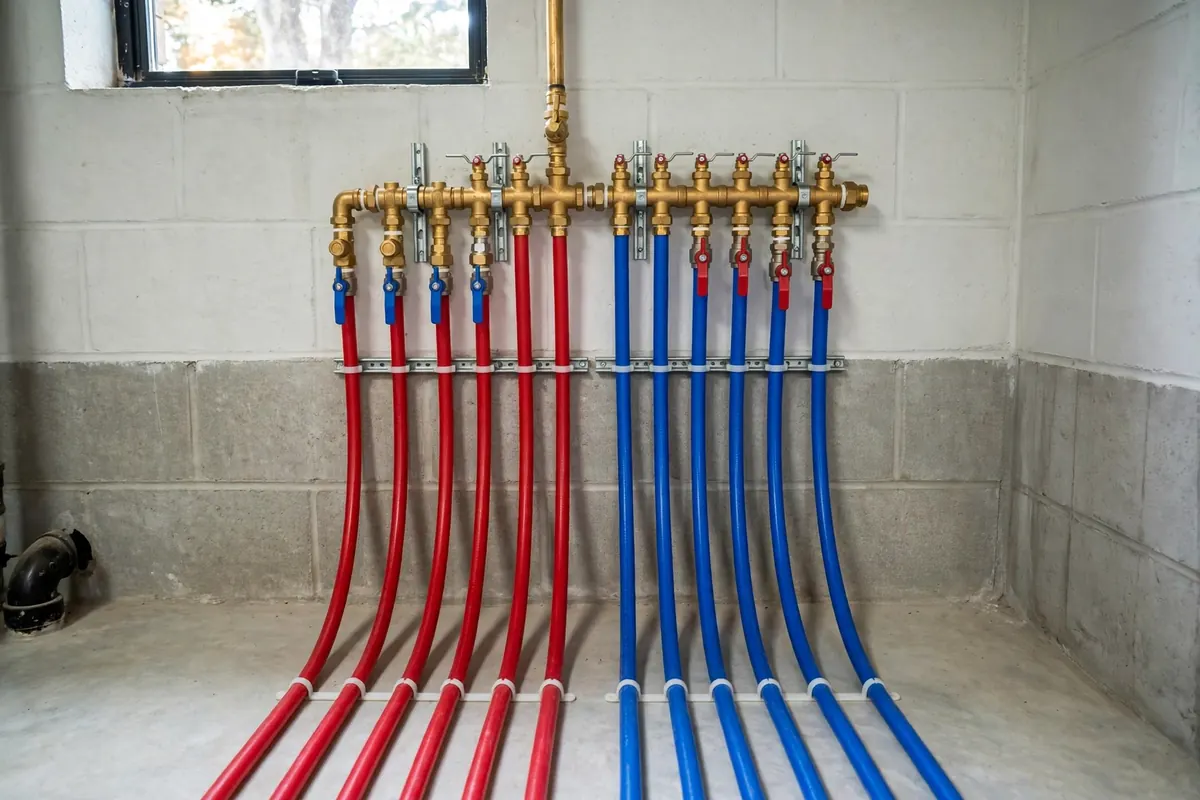
The two materials you'll choose between are copper and PEX, and in Naugatuck's climate the difference matters. Copper is rigid: when ice expands inside it, the pipe splits at its weakest point — a thin spot from corrosion, a stressed fitting. It's durable pipe otherwise, and decades of mid-century Naugatuck homes run on it.
PEX is flexible. It can expand as water freezes inside it — up to roughly three times its diameter — and contract back when the ice melts. That makes it freeze-resistant, not freeze-proof: the brass fittings remain the weak point, and a hard enough freeze in an unprotected run can still fail. But as a repipe material in a town where January averages a 22°F low, PEX gives you the best odds through freeze cycles.
We don't push one material for every house. We match the system — copper where copper is right, PEX where flexibility earns its keep — and we size and route the new runs for the house as it stands today, not as it was plumbed in 1948.
How it works
How a Replacement Job Runs
- We assess the system.
Which runs are failing, what material they are, where the corrosion and thin spots are, and whether the problem is one run or the whole system.
- We plan the route and material.
Full repipe or section replacement, copper or PEX, and the cleanest path through walls, basements, and crawlspaces — planned before anything is cut.
- Permits where required.
Cutting out and replacing concealed pipe counts as new work under borough code and typically needs a permit and inspection. We handle the permit side where the job requires it.
- Replace in stages.
The work runs in planned sections with water-off windows you know about in advance — not a surprise dry house at dinner time.
- Pressure-test every joint.
Each new run is tested under pressure before it disappears behind drywall. Every connection gets watched, not assumed.
- Restore and document.
Openings are closed up cleanly, and you get a record of what was replaced, with what material, and where — useful for insurance and resale alike.
Signs
Signs Your Home Is Due for Replacement
Repeat bursts
The same run failing twice is the system telling you the whole length is compromised, not just the spot that split.
Rust-colored water
Brown or yellow water that clears after running points to internal corrosion in galvanized steel lines. It doesn't reverse.
Chronic low pressure
Corrosion builds up inside old pipe and narrows it from within. If pressure keeps dropping year over year, the pipe is closing up.
Visible corrosion
Flaking, green crust on copper, or rust on exposed runs in the basement — what you can see is the mild version of what's hidden.
Galvanized lines in a pre-1960 home
If your Naugatuck home still runs original galvanized supply lines, they're past their design life. Replacement is a matter of when.
Pinhole leaks
Tiny weeping leaks at multiple spots mean the wall thickness is failing everywhere. Patching pinholes one by one never ends.
Prepare
Before Replacement Day
- Clear access to basements, crawlspaces, and utility areas — we need working room around the runs.
- Move valuables and furniture away from walls where pipe will be opened.
- Plan around the water-off windows we'll schedule with you in advance.
- Know where your main shutoff is — we'll use it, and we'll make sure it works.
- Ask us about the permit — we handle it where the job requires one, and we'll tell you the inspection schedule.
- Keep our number handy: (475) 323-1857 — questions come up mid-job, and we answer them.
Common questions
Frequently Asked Questions
Which is better against freezing — PEX or copper?
PEX has the advantage. It's flexible enough to expand as ice forms and contract back, where rigid copper splits at its weakest point. Neither is freeze-proof — PEX fittings remain the weak point, and an unprotected run of any material can fail in a hard freeze. In Naugatuck's climate, PEX is the safer repipe material.
Do I need a full repipe or just a section?
It depends on the system's condition. If one run is failing and the rest tests solid, a section replacement is the right call. If corrosion, pinholes, or repeat bursts show up across multiple runs — common in pre-1960 galvanized systems — a full repipe costs less than years of emergency calls. We assess first and recommend what the pipe actually needs.
Does pipe replacement need a permit in Naugatuck?
Usually, yes. Replacing concealed pipe with new material counts as new work under borough code and typically requires a permit and inspection. Ordinary repairs and emergency leak-stopping are exempt, but a repipe isn't either of those. We handle the permit side where the job requires it.
Will you have to open my walls?
Yes, in places — concealed supply lines live inside walls. We plan the route to minimize openings, cut cleanly, and close everything back up. Basements, crawlspaces, and attics carry most of the new runs, which keeps wall openings to the minimum the job needs.
How long is the water off during a repipe?
We work in staged sections with water-off windows scheduled in advance, so you're not dry all day. Most homes have water back between stages and overnight. The exact schedule depends on the size of the job — we'll lay it out before we start.
What happens to the old pipe?
Accessible old pipe comes out and is removed. Pipe buried in walls that would require tearing the house apart to extract is typically abandoned in place — disconnected, capped, and left where it can't cause trouble — while the new system runs alongside it.
Done Patching the Same Run?
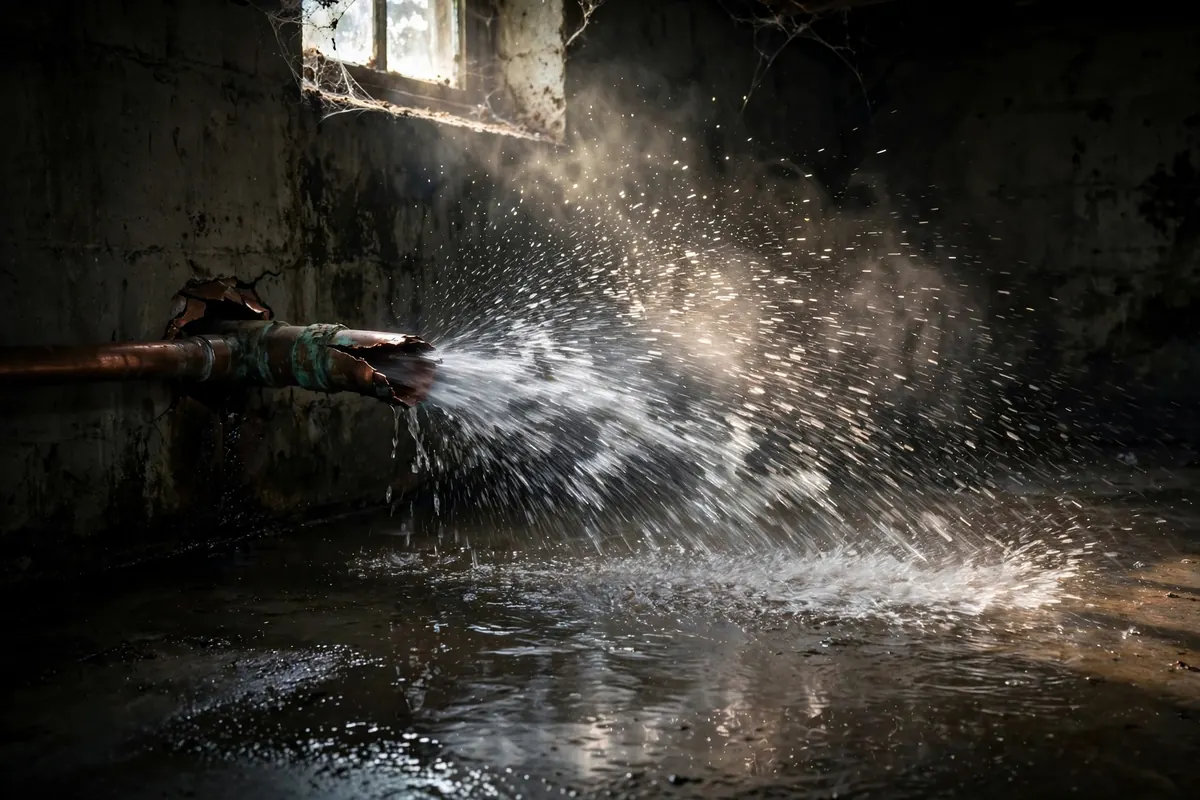
If your Naugatuck home keeps bursting the same lines, the system is telling you something. Call FlowFix — we'll assess the whole system and tell you honestly whether repair or replacement is the right move.