Burst Pipe Repair in Downtown Naugatuck, CT
Downtown Naugatuck holds the borough's oldest housing stock — Victorian and Queen Anne homes along Church, Meadow, and Water streets, many standing since before 1900. Their plumbing is often as old as the walls around it. FlowFix provides burst pipe repair downtown Naugatuck homeowners rely on when a freeze split finally thaws and the water starts coming through.
Local knowledge
The Oldest Pipes in Naugatuck Run Through Downtown
The downtown historic district — listed on the National Register in 1999 — holds Naugatuck's oldest homes and, behind their walls, its oldest plumbing.
Across the borough, 28 percent of owner-occupied homes were built before 1950. Downtown skews older than that average: the Victorians and Queen Annes on Church, Meadow, and Water streets were largely standing by the 1890s. The supply lines inside them — galvanized steel in the oldest, early copper in later builds — have been carrying water for a century or more. Galvanized steel corrodes from the inside; early copper work-hardens at its joints. Both fail the same way: a weak spot holds for decades until a hard freeze provides the final push.
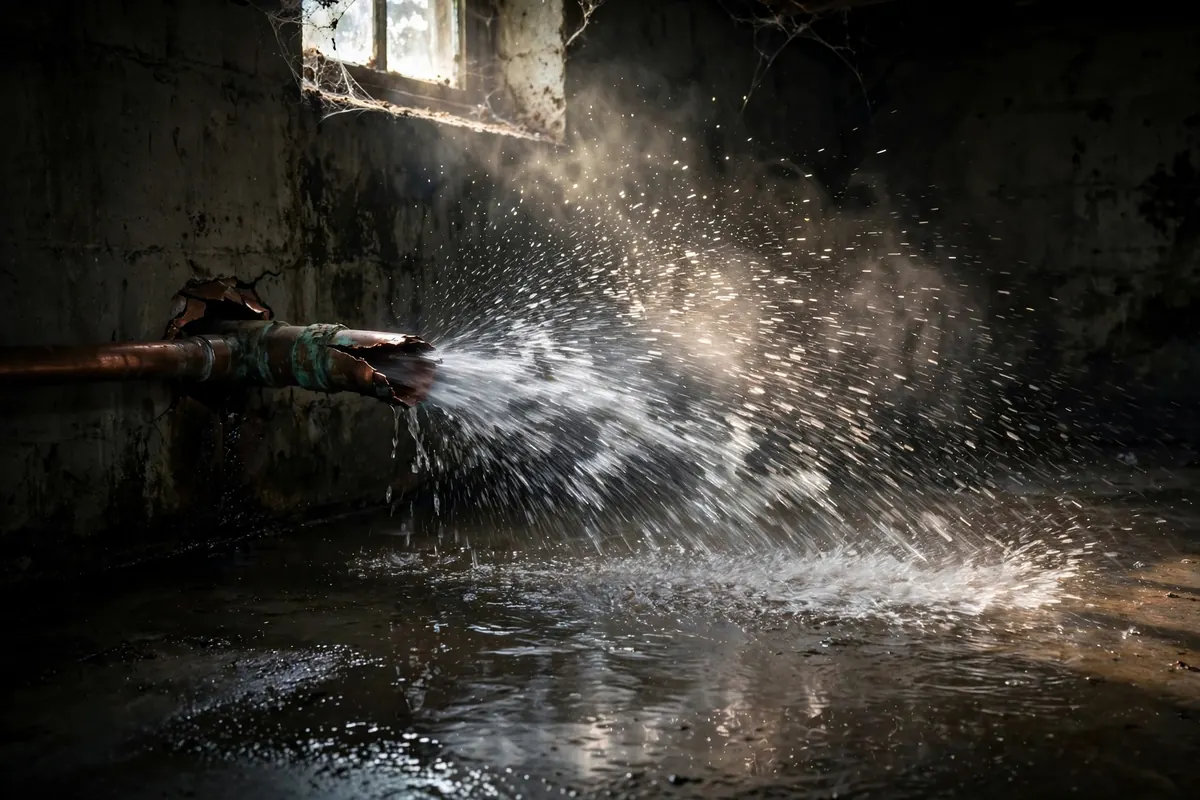
And downtown freezes hard. Naugatuck sits in a river valley where cold air pools overnight, and the downtown core sits at the bottom of it. January's average low is about 21.7°F, with highs barely clearing freezing from December through February. When water freezes it expands roughly nine percent, and inside a rigid century-old pipe that expansion has nowhere to go. The wall splits — usually one to six inches — and you see nothing until the ice thaws, hours after the cold snap that caused it.
The town has replaced its municipal water mains in recent infrastructure work, but that stopped at the curb. The private supply line from the street into the house — and every run inside it — is the homeowner's, and in a downtown Victorian that is the part most likely to burst.
Signs a downtown home's plumbing is past its prime
- Brown or rusty tint when a tap first runs — corrosion inside galvanized lines.
- Water pressure that's fallen off over the years — scale narrowing the pipe from the inside.
- Pipes that rattle or knock when fixtures shut off — tired supports and water hammer.
- Damp plaster, peeling paint, or a musty smell near old radiators and supply runs.
- A main shutoff valve that hasn't been turned in decades — test it now, not during a burst.
If two or more of these sound familiar, the system is telling you what winter will confirm. A prevention visit before December beats an emergency call in January.
What we do
Pipe Services for Downtown Homes
Historic homes need historic-home judgment — repairs that hold without wrecking plaster, trim, and the details that make these houses what they are.
Burst Pipe Repair
We cut out the burst section and join new pipe with proper couplings, opening as little plaster and lath as the job allows. Access through closets and pantries first, finished rooms last.
Burst pipe repairFrozen Pipe Thawing
A pipe frozen in an uninsulated exterior wall of a Victorian can still be saved. We thaw with controlled heat — never open flame — and check the whole run for weak spots.
Frozen pipe thawingEmergency Pipe Repair
Water through a ceiling at 2 a.m. can't wait. We answer around the clock and come ready for the oldest systems in the borough, not just new construction.
Emergency pipe repairPipe Replacement & Repiping
When corrosion has weakened a whole run, spot repairs stop paying. We repipe with modern PEX — flexible through freeze cycles — routed to protect the home's character.
Pipe replacementLeak Detection
A damp spot behind a baseboard or a water bill that crept up — we track hidden leaks to their source before they become a burst behind a plaster wall.
Leak detectionWinter Pipe Protection
Insulation, heat cable, shutoff planning, and thermostat strategy tuned for century-old houses — the work that keeps downtown pipes intact through January.
Winter pipe protectionCoverage
Serving Downtown Naugatuck
We cover the full downtown core — Church, Meadow, and Water streets and the blocks around them — including the National Register district and the older homes just outside it.
One piece of advice for Victorian owners: know where your main shutoff is before you need it. In a house this old the valve may be under a porch, behind a basement panel, or in a spot that made sense in 1895. Original gate valves seize with age — don't force one that won't turn; it can snap off in your hand. Call us and we'll deal with stopping the water, then replace the valve with a modern quarter-turn ball valve as part of the visit.
Common questions
Downtown Naugatuck Pipe FAQs
Why do downtown homes seem to burst pipes more often?
Age plus exposure. Downtown has the oldest supply lines in the borough — galvanized steel and early copper thinned by a century of corrosion — sitting in the coldest part of town. The river valley pools cold air overnight, so downtown gets the longest, hardest freezes. Old pipes plus hard freezes is the combination that splits.
Will the repair damage my plaster walls?
We keep openings to a minimum. Whenever possible we reach the pipe through closets, pantries, basement ceilings, or other low-visibility spots instead of cutting finished plaster. Some access is unavoidable when a burst hides inside a wall, but we open only what the repair needs — nothing more.
My main shutoff valve hasn't moved in decades. What should I do?
Don't force it — a seized gate valve can break off, which turns a plumbing visit into an emergency. If a pipe is already bursting, call us and we'll stop the water another way. If nothing is wrong yet, have the valve tested and, if it's seized, replaced with a modern quarter-turn valve before winter.
Do I need a permit for pipe repair in downtown Naugatuck?
Stopping an active leak needs no permit. But if a concealed pipe has to be cut out and replaced with new material, borough code treats that as new work and typically requires a permit and inspection. We handle the permit side wherever the job requires it.
How do I protect a Victorian's pipes this winter?
Insulate exposed runs in the basement, crawlspace, and any exterior-wall runs. Keep the thermostat at 55°F or higher even when away — these houses have cold corners where pipes run through unheated spaces. Open cabinet doors under sinks on exterior walls, let faucets drip slightly during extreme cold, and make sure you know where the main shutoff is.
Burst Pipe in Downtown Naugatuck? Call FlowFix.
Old houses don't forgive slow leaks. Shut off the water if you can, and call — we'll stop the leak, fix the pipe, and tell you how to keep the next freeze from doing it again.