Winter Pipe Protection in Naugatuck, CT
January averages a 22°F low in the valley — and that's when Naugatuck pipes fail. We protect yours before the first hard freeze.
The problem
Prevention Beats a 2 a.m. Burst
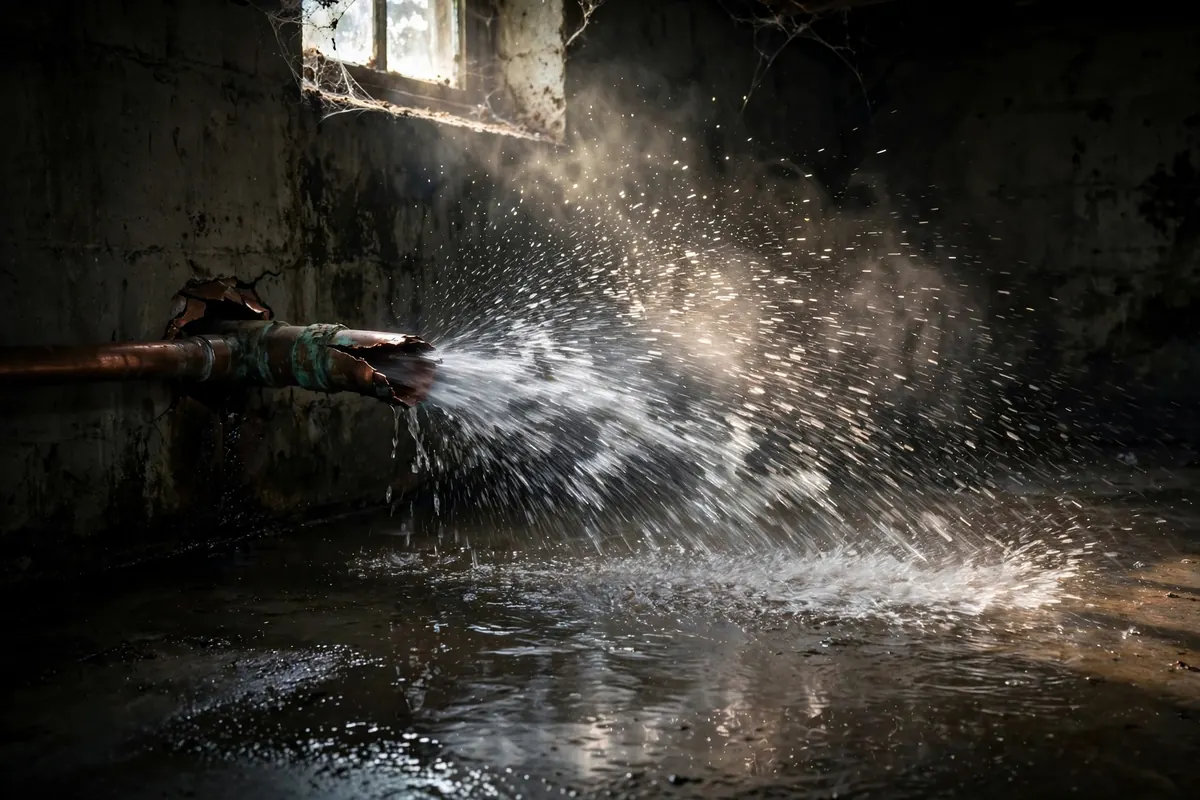
Every January, the same pattern: deep freeze, thaw, then the calls. The houses that get protected in fall don't call in winter.
Burst season in Naugatuck runs December through February and peaks in January. The borough's January average low sits around 22°F, and because Naugatuck lies in a river valley, cold air pools overnight — actual lows in the valley run colder than the forecast for the surrounding hills. That's months of sustained freeze exposure, and it's the single biggest driver of burst pipes in town.
Winter pipe protection Naugatuck homeowners schedule in October and November, before the December-to-February peak. The work is unglamorous and effective: insulate the exposed runs, add heat cable where it earns its keep, shut off and drain the outdoor spigots, map your shutoffs, and set a thermostat strategy for the coldest nights. No single step guarantees a pipe can't freeze — in a hard enough cold, anything unprotected is at risk — but together they move your house from "waiting for it" to "ready for it."
Older homes need it most. More than a quarter of Naugatuck's owner-occupied homes were built before 1950, and those galvanized steel and early copper lines are exactly the ones that split when ice expands nine percent inside them.
What we do
What We Protect and How
We walk the house and find every run that's exposed to cold: supply lines in unheated basements and crawlspaces, pipes in exterior walls, lines through garages, hose bibbs on outside walls. Each one gets ranked by risk — how cold it gets there, what material the pipe is, whether it's failed before.
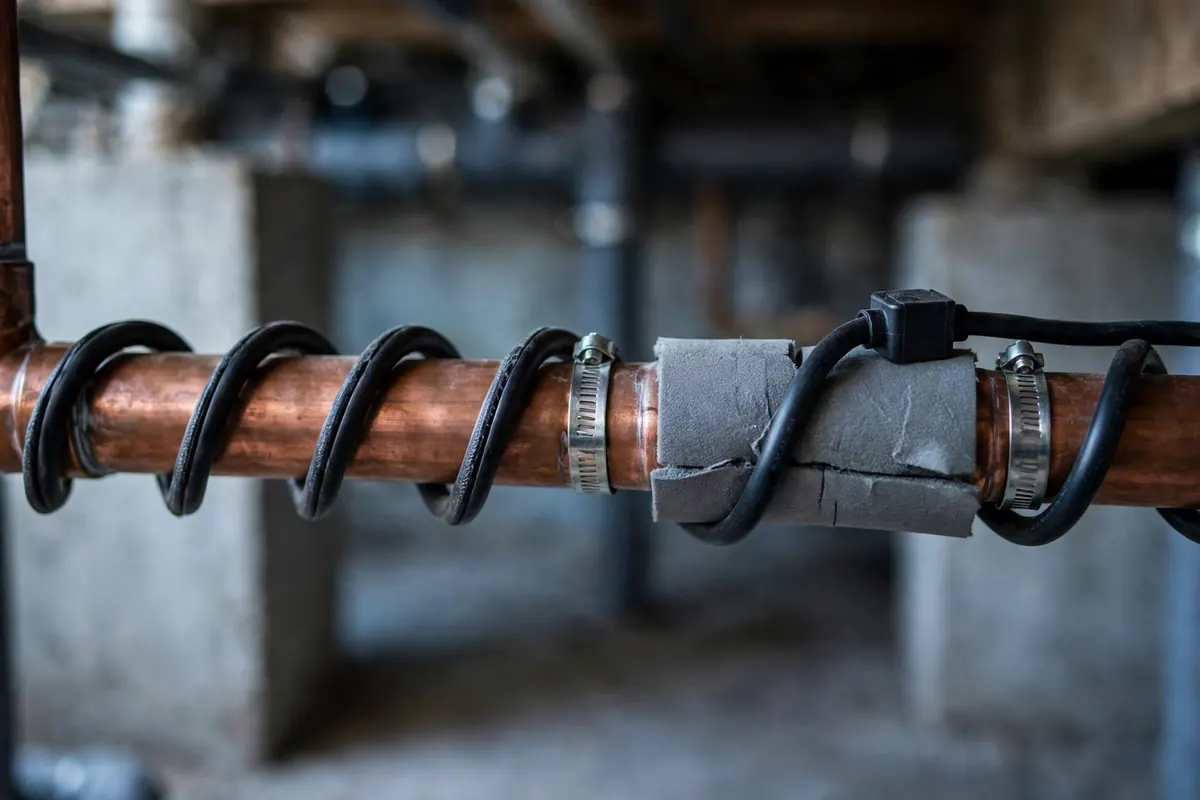
Exposed runs get insulated with proper pipe insulation, fitted snugly with no gaps — insulation slows heat loss, which buys the pipe hours through a cold night. The highest-risk runs get self-regulating heat cable, which warms the pipe when temperatures drop and backs off when they don't. Outdoor spigots get shut off from the inside valve and drained, so there's no water sitting in the wall to freeze back into the house.
Then we map your shutoffs — main valve, fixture valves, the spigot shutoffs — and leave you a plain freeze-night routine: thermostat setting, cabinet doors, which faucets to drip. Protection is half hardware, half habits.
How it works
A Winter-Protection Visit
- We walk the house.
Every accessible supply run gets found and assessed — basements, crawlspaces, exterior walls, garages, attics. We note material, exposure, and condition.
- We rank the risks.
Not every run needs the same treatment. We prioritize the sections most likely to freeze: coldest locations, oldest pipe, runs that failed before.
- We insulate exposed pipe.
Proper pipe insulation, fitted with no gaps, on every vulnerable run we can reach. Sealed at joints so cold air can't get behind it.
- Heat cable where it earns its keep.
Self-regulating heat cable on the highest-risk runs — the ones insulation alone can't carry through a January night.
- Spigots and shutoffs.
Outdoor spigots shut off from the inside and drained. Main valve tested, labeled, and shown to you — a working shutoff is part of protection.
- Your freeze plan.
You get the nightly routine in plain language: thermostat setting, cabinet doors, drip strategy, and what to do if a pipe freezes anyway.
Your part
The Homeowner Freeze-Night Routine
Thermostat at 55°F or higher
Even when you're away. Dropping the heat to save money is the most common cause of freeze damage we see.
Open cabinet doors
Sink cabinets on exterior walls block warm air from reaching the pipes. Open them on the coldest nights.
Drip vulnerable faucets
During extreme cold, let faucets on exposed runs drip slightly — hot and cold sides. Moving water resists freezing.
Heat the unused rooms
That spare bedroom with the heat off has pipes in its walls. Keep every room with plumbing at temperature.
Close the garage
An open garage door drops the temperature around any lines running through or above it. Keep it shut overnight.
Know your shutoff
If a pipe freezes despite everything, you'll want the main valve fast. Find it, test it, label it — before winter.
Travel
Before You Leave Town for Winter
- If you'll be gone more than a day during deep cold, shut off the main valve and drain the lines — no water, no burst.
- If the house must stay heated, keep the thermostat at 55°F minimum and have someone check the house daily.
- Open cabinet doors under sinks on exterior walls before you leave.
- Shut off and drain outdoor spigots from the inside valve.
- Leave a house key and our number — (475) 323-1857 — with whoever is checking the house.
- Consider a smart leak detector with automatic shutoff for real protection while you're gone.
Common questions
Frequently Asked Questions
What temperature should I leave the thermostat at in winter?
55°F or higher — even when you're away, even overnight. Pipes inside walls run colder than the room air, so a 55°F room can mean near-freezing temperatures inside an exterior wall. The small heating cost beats a burst pipe every time.
Which faucets should I drip, and how much?
Drip the faucets served by vulnerable runs — exterior walls, unheated areas, lines that froze before. Both hot and cold sides, since each has its own supply line. A thin, steady stream is enough; you're keeping water moving, not running a bath.
Is heat tape safe?
Self-regulating heat cable installed to the manufacturer's instructions is safe and effective — it warms the pipe as temperatures drop and eases off as they rise. Never overlap heat cable on itself, never use it on a run the manufacturer doesn't rate it for, and replace cable that's cracked or ancient. We install it as part of winter-protection visits.
Do I need to shut off my outdoor spigots?
Yes. Shut off the inside valve feeding each outdoor spigot, open the spigot outside, and let it drain. Water left in that short run freezes back into the wall — one of the most common burst locations we see, and one of the easiest to prevent.
Can insulation alone stop a pipe from freezing?
No — insulation slows heat loss, it doesn't create heat. In a long, hard freeze, an insulated but unheated pipe will still freeze eventually; it just takes longer. That's why the highest-risk runs get heat cable too, and why the thermostat and dripping habits matter as much as the hardware.
When should I book winter protection?
October or November — before the December-to-February freeze season, while the schedule is open and the work can be done in daylight. By the time the first January cold snap hits, the protected houses are done and the rest are calling us at midnight.
Get Ahead of Winter This Year.
October and November are the window — insulation, heat cable, spigots, and a freeze plan before the January cold arrives. Call FlowFix and we'll walk your house before the freeze does.