Frozen Pipe Thawing in Naugatuck, CT
No water from a faucet in January usually means a frozen line. We thaw it safely — before the ice expands enough to split the pipe.
The problem
A Frozen Pipe Is a Warning, Not a Verdict
Ice inside a pipe is reversible. A split pipe is not. Thawing is the work that happens in between.
When a section of water line freezes solid, flow stops — but the danger is still building. Water expands by roughly nine percent as it freezes, and the pressure between the ice blockage and a closed faucet keeps climbing. The pipe usually splits before or during the thaw, not while the ice sits quietly. That's why a frozen pipe you "wait out" often becomes a burst pipe you mop up.
We offer frozen pipe thawing Naugatuck homeowners can call for any time the taps run dry in freezing weather. The job is straightforward but unforgiving: apply controlled heat to the frozen section, give the meltwater somewhere to go, and watch the whole run as pressure normalizes — because the moment the ice releases is the moment a hidden split shows itself.
One rule governs everything we do: never an open flame. A torch on a frozen pipe risks fire in the wall cavity and can heat one spot so fast that the steam pressure bursts the very pipe you're trying to save. Controlled heat — a heat gun or hot towels — is the safe way, every time.
Signs
How to Tell Your Pipe Is Frozen
The classic sign: a faucet that gives you nothing — or a thin trickle — on a freezing morning while the rest of the house runs fine. That tells you the freeze is in that fixture's supply run, not the main.
Other signs show up before the water stops entirely. Frost or condensation on an exposed pipe in the basement. A banging or whistling sound when you open a tap — air trapped behind the ice. A strange smell from a drain line that's frozen shut. And in Naugatuck's oldest homes, a pipe that froze last winter will freeze again this winter unless something changed: same run, same exposure, same outcome.
Where we find them most: supply lines in exterior walls, crawlspaces, unheated basements and garages, and hose bibbs on the outside wall. Naugatuck's river-valley cold pooling makes overnight lows worse than the forecast suggests, and January's average low of about 22°F means the freeze season here runs long — December through February.
How we fix it
How We Thaw a Frozen Pipe
- Find the frozen section.
We trace the dead fixture back along its supply run to the ice blockage — usually where the line passes through the coldest part of the house.
- Open the faucet.
The tap stays open through the whole thaw. It relieves pressure and gives meltwater — and steam — somewhere to escape instead of bursting the pipe.
- Apply controlled heat.
A heat gun or hot towels, worked from the open faucet back toward the frozen section. Gradual, even heat — never an open flame, never boiling water on plastic pipe.
- Watch for leaks as the ice melts.
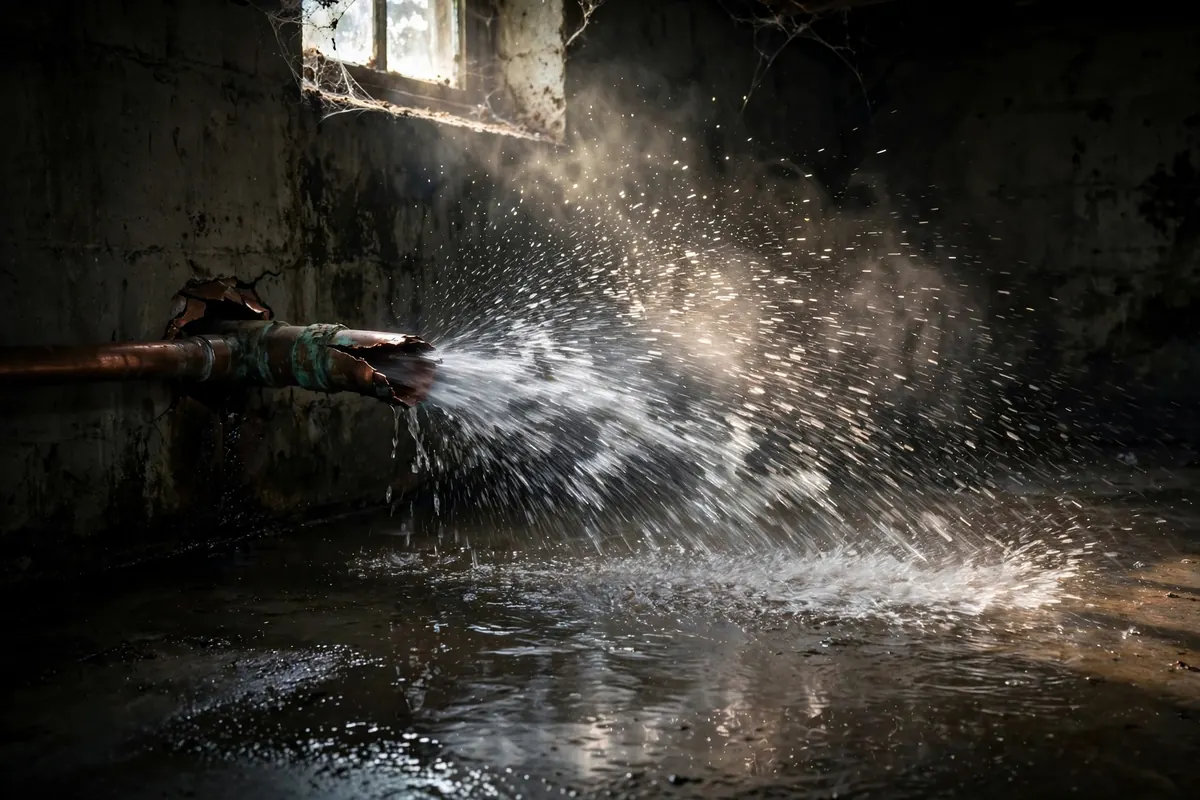
This is the critical moment. If the freeze already split the pipe, water appears as the ice releases — and we're right there to shut it down.
- Inspect the full run.
Once flow is restored, we check the entire exposed run for weak spots: bulging, corrosion, previous patches, and fittings that took the pressure.
- Talk prevention.
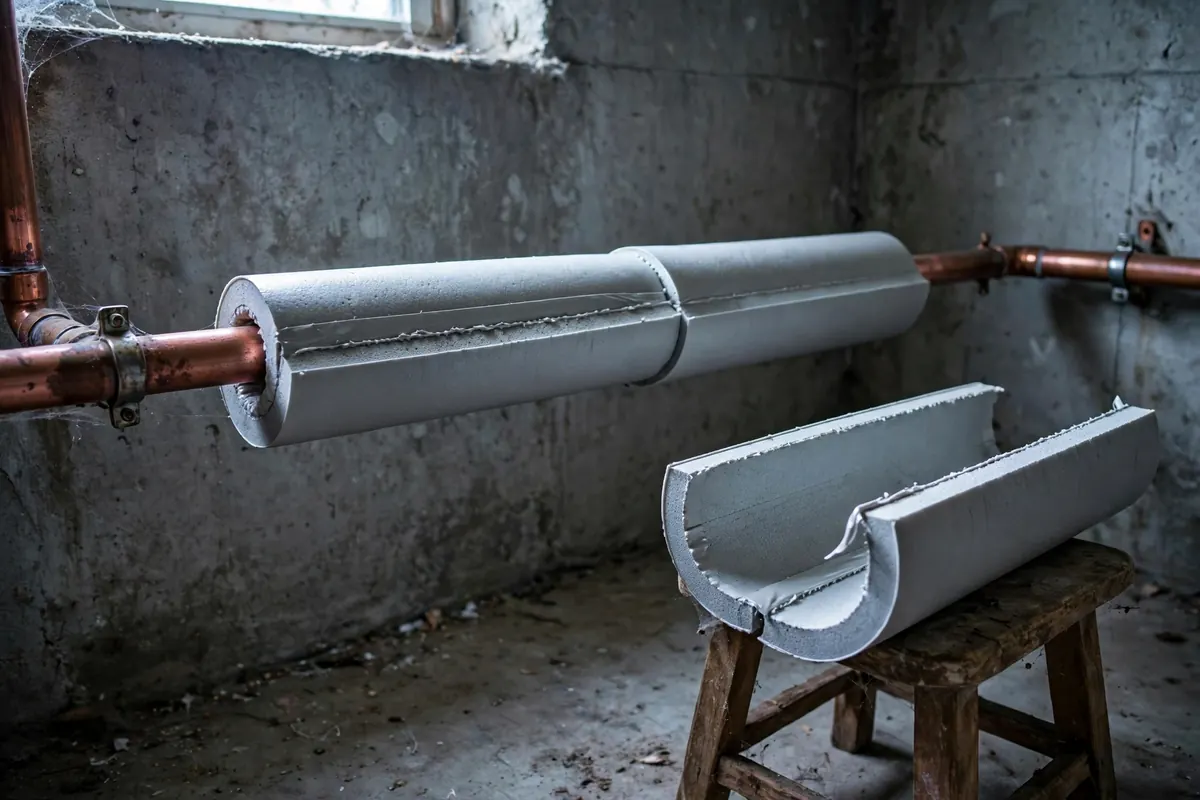
You'll know why this run froze and what stops it next time — insulation, rerouting, heat cable, or a section of freeze-flexible PEX.
Freeze zones
Where Naugatuck Pipes Freeze First
Exterior-wall kitchens
Sink supply lines run inside the coldest wall in the house. Closing the cabinet below cuts off what little warm air reaches them.
Crawlspaces
Vented crawlspaces sit at outdoor temperature. Uninsulated runs down there are the first to freeze in a cold snap.
Unheated basements
Older Naugatuck homes often have basement sections with no heat. Pipes along those walls freeze while the upstairs stays warm.
Hose bibbs
An outdoor spigot left open to the house line freezes back into the wall. The split happens inside, where you can't see it.
Garage and laundry lines
Washing-machine supplies and utility sinks in attached garages run through spaces that drop below freezing overnight.
Vacant homes
A house sitting empty with the heat low or off freezes everywhere at once. The damage is discovered at the next showing — or the next thaw.
While you wait
What To Do Until We Arrive
- Leave the affected faucet open — even a drip gives pressure somewhere to go.
- Turn up the heat in the area near the frozen pipe, and open cabinet doors under sinks on exterior walls.
- Never use an open flame, torch, or kerosene heater on a frozen pipe.
- Don't pour boiling water directly on plastic (CPVC or PEX) pipe — the thermal shock can crack it.
- Find your main shutoff valve now, before you need it — if the pipe split, you'll want it fast.
- If you see water anywhere it shouldn't be, shut the main off and call (475) 323-1857.
Common questions
Frequently Asked Questions
Can a frozen pipe be saved before it bursts?
Often, yes. If water has stopped flowing from a faucet during freezing weather but nothing has split yet, the pipe can usually be thawed safely with controlled heat. The key is acting before the ice expands enough to crack the wall — and having someone on hand when the thaw starts, in case the split already happened.
Why can't I just use a torch or heat lamp on it?
An open flame in a wall cavity is a fire risk, and it heats one spot so fast that steam pressure can burst the very pipe you're trying to save. A heat gun or hot towels warm the pipe gradually and evenly. There is no safe version of the torch method — we don't do it, and you shouldn't either.
Should I let my faucets drip during a freeze?
Yes — moving water resists freezing. During extreme cold, let the faucets served by vulnerable runs drip slightly, both hot and cold sides. It costs a little water and buys a lot of protection. Focus on fixtures on exterior walls and in unheated areas.
Is PEX safer against freezing than copper?
PEX is freeze-resistant, not freeze-proof. It can expand as ice forms and contract back, where rigid copper splits at its weakest point. But PEX fittings — usually brass — remain the weak point and can still fail. The material helps; it doesn't make a run immune.
What if the pipe already split while it was frozen?
Then it's a burst repair: we cut out the split section and join new pipe, then pressure-test the run. You'll know the moment the ice releases — water appears where it shouldn't. Shut off the main if you can, and call us. Thawing and burst repair are often the same visit.
How do I keep this from happening again?
Insulate the exposed run, consider heat cable on the highest-risk sections, keep the thermostat at 55°F or higher even when you're away, open cabinet doors on exterior walls, and shut off and drain outdoor spigots before winter. A winter-protection visit covers all of it in one go.
Faucet Dry in Freezing Weather? Call Before It Splits.
A frozen pipe is still saveable. A burst one is a repair bill and a mop-up. Call FlowFix and we'll thaw it safely — and check the whole run while we're there.